From Mind to Music: The Human Journey Behind Every Filmstro Track
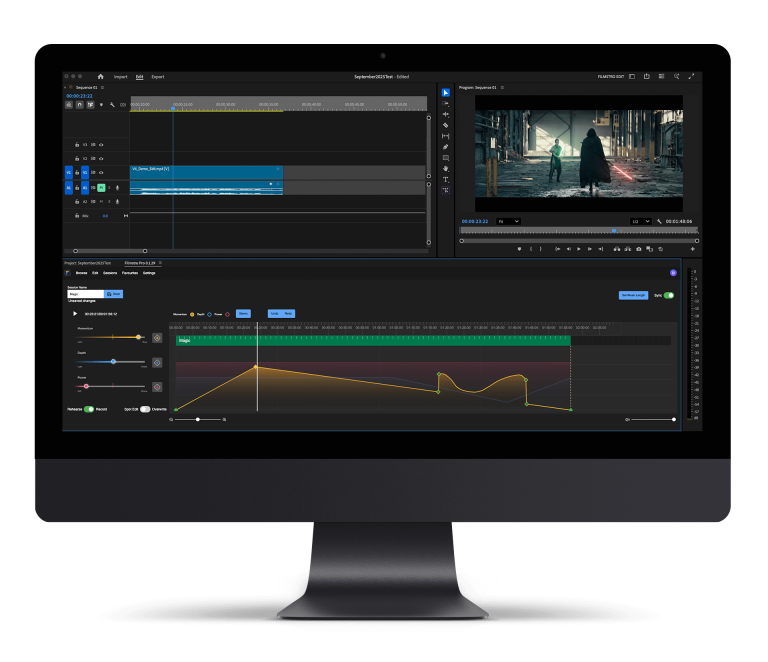
When you drag a Filmstro slider to shape a music track — intensifying the momentum, dialling down the depth, or boosting the power — it might feel like magic. But behind every one of those real-time adjustments is a deeply human journey. It’s not AI. It’s not algorithmic slicing and dicing. It’s a carefully orchestrated dance between composer, music supervisor, developer, and creative director. Here’s how a piece of Filmstro music comes to life.
The Composer: Inspiration Meets Innovation
It all begins with a composer — not a machine or a prompt. At Filmstro, we believe the best music is created when composers are writing in the genres they love most. That’s why we give our artists maximum creative freedom. While we occasionally circulate briefs, our core philosophy is: let talent shine in its natural habitat.
Each composer has the option to either submit their stems directly or share their full Logic session. To help them bring their vision into the Filmstro format, we provide them with our proprietary Audio Unit plugins. These tools work directly inside their DAW and allow them to preview how their composition will respond to our adaptive sliders in real time.
This isn’t an afterthought — it’s composition with the format in mind from the very beginning. Rather than retrofitting music to fit an algorithm, our composers bake the Filmstro DNA into every note they write.
The Music Supervisor: Crafting the Emotional Engine
Once a track is submitted, our music supervisors step in. Their role is part technical, part musical, and wholly essential.
They take the composer’s sessions and fine-tune the plugin settings to ensure consistency across the Filmstro library. This involves setting the correct slider positions and checking that every “inflection” — our term for a unique point on the slider spectrum — works musically and emotionally.
But the work doesn’t stop there. Because Filmstro’s engine doesn’t play a traditional stereo mix, the music supervisors mix and master stem by stem. There are no shortcuts. No slap-on-limiters. It’s old-school, nuanced engineering — done in a new-school, adaptive environment.
They’re also responsible for the less glamorous, but mission-critical, backend tasks: metadata, template tagging, and preparing the track for live deployment on the platform.
The Tech Team: Building the Adaptive Framework
Behind the scenes, our developers have built a robust backend system that allows our music team to configure templates and add final mastering settings. These tools let us control everything from gain staging to real-time adjustments in the app — ensuring that each slider interaction feels smooth and professional.
Their work empowers the entire team to focus on creativity while knowing the technical foundation is solid.
The Creative Director: Bridging Vision and Execution
That’s where I come in. As the original architect of the Filmstro format, I help troubleshoot the trickiest parts of the process — especially when a supervisor is trying to convert a composer’s piece into our adaptive structure and something just isn’t behaving. Whether it’s a matter of orchestration, dynamics, or logic session setup, I’m here to make sure the composer’s vision translates seamlessly into the user’s hands.
The Final Polish: Testing, Tuning, and Tension
Before a track goes live, it goes through rigorous testing on our staging environment. We make sure that everything works — not just the audio itself, but the full adaptive behaviour of the track, including custom-length edits and real-time slider movements. It’s not enough that the music sounds good; it has to feel good when it responds to you, the filmmaker.
Human Music for Human Stories
In a world where generative AI promises instant music at the click of a button, we offer something different: intentionality. Every Filmstro track is a collaboration between passionate musicians, detail-obsessed music supervisors, and a tech team that deeply respects the human artistry involved in creating music.
Filmstro is what happens when musical talent is empowered by technology — not replaced by it — to tell better stories, together.